Industrial Painting & Corrosion Protection in North West
Industrial Painting & Corrosion Protection supports longer asset life, cleaner presentation and more dependable steelwork protection across factories, utilities, marine sites and exposed external structures. On industrial sites across North West England, North Wales and the wider United Kingdom, the strongest outcomes normally come from survey-led planning that reflects live operations, surface condition, access limits and the end-use environment before labour is booked.
Early planning often improves when it is aligned with industrial & protective coatings because that related service can expose defects, improve substrate readiness or clear the way for the main programme without creating duplicated access costs later in the job.
Why this service matters on North West projects
On regional industrial sites, painting work is usually driven by more than aesthetics, because once corrosion gets established it can raise maintenance costs, shorten repaint cycles and compromise how professional the site looks. Typical reasons for action include coating breakdown, visible rust bleed, reputational concerns, audit pressure and the need to align exposed assets with a longer-term corrosion-management plan. That is why experienced contractors normally scope the surrounding risks, not just the visible defect, before the first operative, access platform or blast pot arrives on site.
What a realistic project usually includes
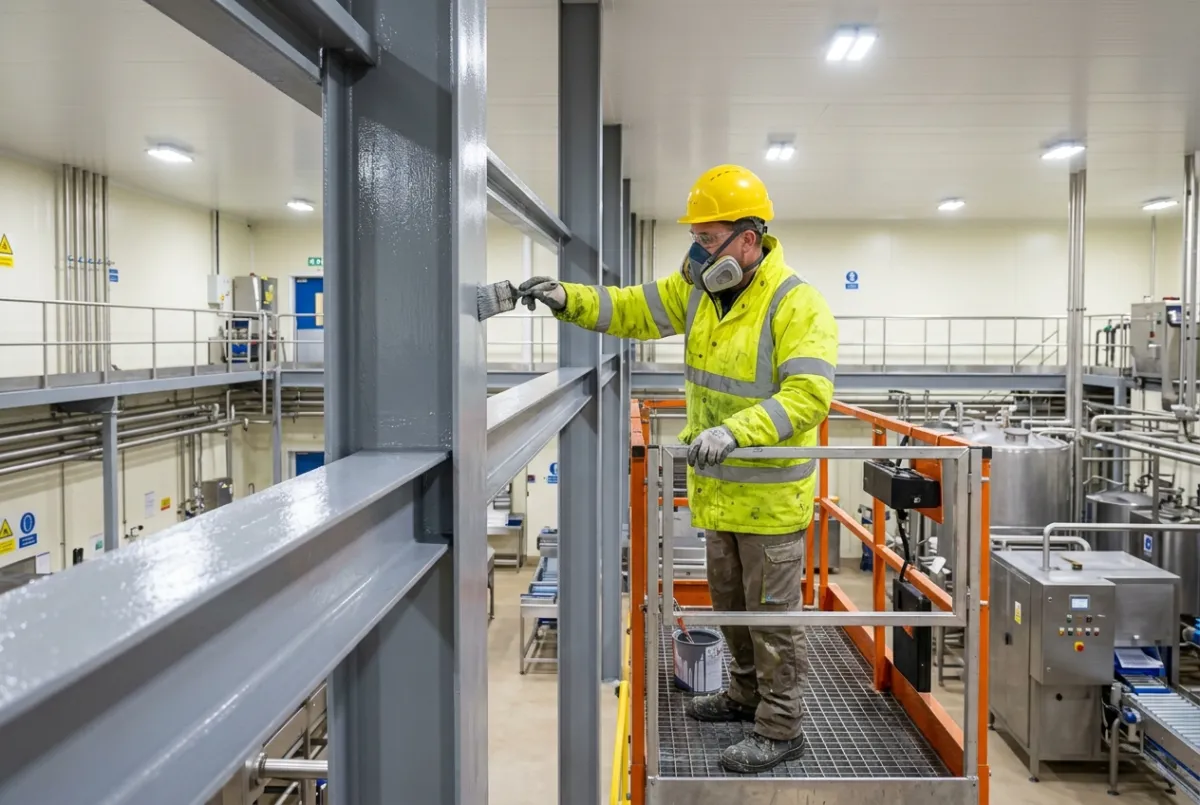
The scope may include steelwork painting, corrosion-control systems, localized repairs, full repainting, access support and handovers aligned with the exposure conditions the asset will face in service. On better-run North West contracts, the scope also defines what is protected, what finish is required at handover and which hold points the client wants before the next trade starts.
| Work option | Best fit | Typical duration | Expected outcome |
|---|---|---|---|
| Localised corrosion repair | Priority defects or patch repairs | 1-2 days | Extends life in specific areas |
| Phased repainting package | Several linked structures or elevations | 2-4 days | Balances appearance and protection needs |
| Full corrosion-protection scheme | Large industrial or marine-exposed asset | 3-5 days | Best for longer-term asset preservation |
Costs, timings and what changes the budget
Targeted industrial painting works often start around £2,000 to £4,000, while larger corrosion-protection packages with preparation, access and multiple structures can range from £5,000 to £10,500. Smaller packages can be completed within one to two days, but broader industrial painting programmes usually require three to five days when preparation, drying stages and inspection points are included. These are realistic commercial planning ranges rather than fixed quotations, but they reflect the labour, access, containment and coordination demands commonly seen across North West England and North Wales industrial environments.
In specification-led environments, teams should also follow COSHH guidance so the work is managed safely around contamination, substances, work equipment or work-at-height controls relevant to the task.
Site survey priorities
Before work starts, competent teams should confirm residue type, substrate sensitivity, utilities, drainage limits, exclusion zones, welfare, waste handling and any client rules that affect how the job can be sequenced. That level of preparation is part of E-E-A-T in practice: real industrial experience shows that the best result is usually determined before the tools are switched on.
Local delivery factors across North West England and North Wales
North West England and North Wales present mixed inland and coastal exposures, so corrosion-protection strategies often need to be adjusted to suit marine air, washdown regimes and weathering intensity. Where similar issues have already been addressed elsewhere in the contractor network, examples from industrial painting and protective coatings in Anglesey can help clients compare likely sequencing, exposure risks and the relationship between preparation work, access strategy and long-term asset care.
What to confirm before mobilisation
The best plans define preparation standard, coating build, environmental controls, curing expectations, access method and the level of visual finish and protection the client needs at completion. Clients also benefit when the method statement, risk controls, access plan and final acceptance standard are agreed in writing before the programme window opens.
Where related services improve the outcome
Even when the original brief looks straightforward, the finished result is often stronger when the programme is coordinated with access & high level work if that linked service reduces rework, improves finish quality or avoids returning to the same access setup later.
For site managers, engineering leads and procurement teams, joined-up planning makes costs easier to compare and helps align cleaning, preparation, coating and access decisions with shutdown windows, inspection requirements and long-term asset performance expectations.
Frequently asked questions
Is industrial painting mainly about appearance?
No. On many sites the main goal is corrosion resistance, substrate preservation and extending the service life of exposed assets.
How do you choose the right corrosion-protection system?
The right system depends on the substrate, preparation standard, exposure conditions and how long the client expects the coating to perform.
Can painting be combined with access works?
Yes, and on tall or awkward structures it often makes sense to plan access and painting together from the beginning.
Request a project survey
If you need industrial painting & corrosion protection across North West England or North Wales, use the industrialshotblastingnorthwest.co.uk homepage to request a survey-led recommendation, a realistic budget range and a programme that fits live operations, shutdown windows and long-term asset protection goals.