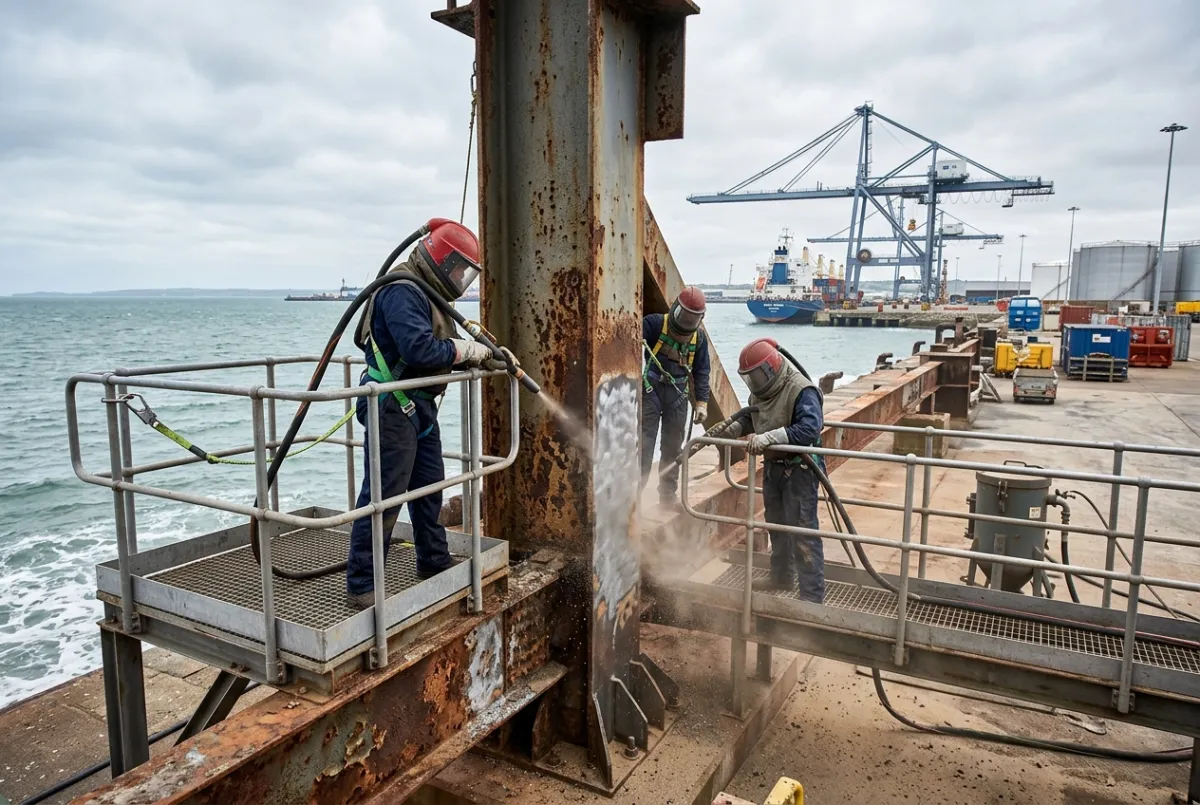
Marine & Offshore Surface Preparation in North West
Marine & Offshore Surface Preparation helps operators clean and prepare exposed steel and infrastructure before coating, repair or inspection in harsh coastal and marine environments. On industrial sites across North West England, North Wales and the wider United Kingdom, the strongest outcomes normally come from survey-led planning that reflects live operations, surface condition, access limits and the end-use environment before labour is booked.
Early planning often improves when it is aligned with shot blasting & abrasive blasting because that related service can expose defects, improve substrate readiness or clear the way for the main programme without creating duplicated access costs later in the job.
Why this service matters on North West projects
Marine and offshore assets across the North West and North Wales face salt spray, wind-driven contamination and rapid corrosion cycles, so preparation standards often have to be tighter than inland industrial work. Common triggers include visible corrosion, coating breakdown, salt staining, reduced inspection clarity and the need to prepare assets properly before marine-grade systems are applied. That is why experienced contractors normally scope the surrounding risks, not just the visible defect, before the first operative, access platform or blast pot arrives on site.
What a realistic project usually includes
The work may include corrosion removal, coating breakdown treatment, salt contamination control, steel preparation on quayside assets, offshore-linked structures and exposed marine plant ready for the next stage. On better-run North West contracts, the scope also defines what is protected, what finish is required at handover and which hold points the client wants before the next trade starts.
| Work option | Best fit | Typical duration | Expected outcome |
|---|---|---|---|
| Targeted marine prep | One exposed steel element or deck zone | 1 day | Fast removal of salt and failed coating |
| Phased offshore preparation | Several linked coastal structures | 2-3 days | Better control around port or plant operations |
| Full marine preparation package | Large offshore-linked or quayside asset | 3-5 days | Best for major recoating or refurbishment |
Costs, timings and what changes the budget
Smaller marine-preparation tasks often start around £2,000 to £4,000, while broader programmes with containment, tidal access limits and multiple structures commonly range from £5,000 to £10,500. Some focused work fronts can be prepared in a day, but larger marine packages usually need two to five days once weather windows, access sequencing and client hold points are included. These are realistic commercial planning ranges rather than fixed quotations, but they reflect the labour, access, containment and coordination demands commonly seen across North West England and North Wales industrial environments.
In specification-led environments, teams should also follow working at height guidance so the work is managed safely around contamination, substances, work equipment or work-at-height controls relevant to the task.
Site survey priorities
Before work starts, competent teams should confirm residue type, substrate sensitivity, utilities, drainage limits, exclusion zones, welfare, waste handling and any client rules that affect how the job can be sequenced. That level of preparation is part of E-E-A-T in practice: real industrial experience shows that the best result is usually determined before the tools are switched on.
Local delivery factors across North West England and North Wales
Because the regional network covers ports, coastal process sites and marine-linked industry, the safest North West plans usually allow for stronger winds, tighter access windows and faster contamination return. Where similar issues have already been addressed elsewhere in the contractor network, examples from marine and coastal infrastructure cleaning in Anglesey can help clients compare likely sequencing, exposure risks and the relationship between preparation work, access strategy and long-term asset care.
What to confirm before mobilisation
Planning should cover weather exposure, access over water or near quaysides, contamination controls, drainage, substrate condition and the exact preparation standard required before coating starts. Clients also benefit when the method statement, risk controls, access plan and final acceptance standard are agreed in writing before the programme window opens.
Where related services improve the outcome
Even when the original brief looks straightforward, the finished result is often stronger when the programme is coordinated with industrial painting & corrosion protection if that linked service reduces rework, improves finish quality or avoids returning to the same access setup later.
For site managers, engineering leads and procurement teams, joined-up planning makes costs easier to compare and helps align cleaning, preparation, coating and access decisions with shutdown windows, inspection requirements and long-term asset performance expectations.
Frequently asked questions
Why is marine preparation different from inland work?
Because salt contamination, moisture exposure and access constraints create a more aggressive environment that can quickly undermine coating performance.
Can preparation be planned around live port activity?
Yes, but the programme usually has to work around weather, traffic, permits and the client’s operational windows.
What should be confirmed before coating starts?
The key checks are cleanliness standard, residual contamination, surface profile and whether the prepared substrate still matches the specification at handover.
Request a project survey
If you need marine & offshore surface preparation across North West England or North Wales, use the industrialshotblastingnorthwest.co.uk homepage to request a survey-led recommendation, a realistic budget range and a programme that fits live operations, shutdown windows and long-term asset protection goals.