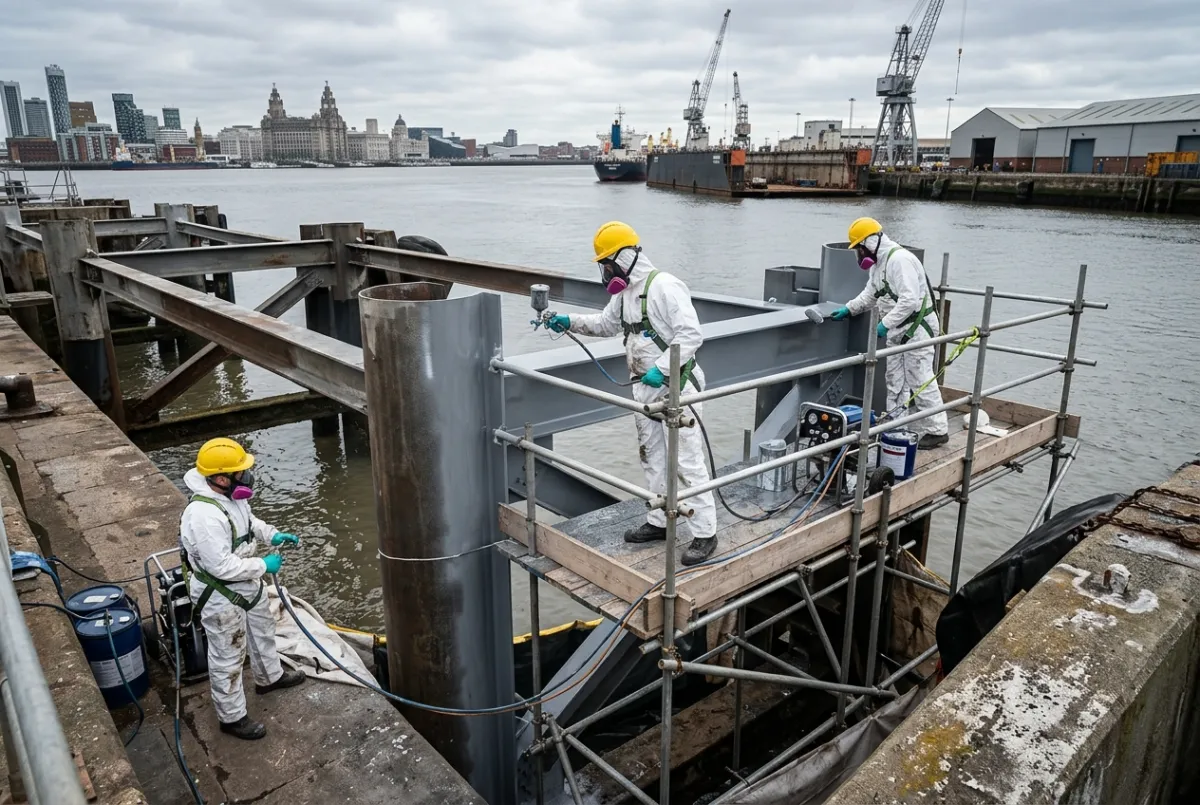
Protective Coatings for Coastal & Marine Assets in the North West
Protective Coatings for Coastal & Marine Assets in the North West is rarely just about making steel look cleaner. On sites across North West England, it is usually part of a wider maintenance, coating or refurbishment decision where the client needs a predictable surface condition, realistic programme control and a contractor who understands how blasting affects the next trade. Early planning with marine and offshore surface preparation in North West England often helps define the correct work fronts, the safest access plan and the point at which blasting stops being a cleaning activity and becomes a technical surface-preparation process.
That distinction matters commercially. If the specification is vague, a project can look cheaper on paper but still lose time once the coating inspector, maintenance team or shutdown planner asks for a finish the original scope never properly defined. A survey-led approach gives buyers in North West England a more defensible programme, clearer cost assumptions and a better handover standard.
Why this topic matters on real industrial sites
In practice, the key issue is coating-system planning for steel exposed to salt, spray, abrasion and severe weathering. That means the contractor is not just removing visible contamination; they are working toward an outcome that supports coating adhesion, corrosion control, inspection quality or safer access. On live industrial sites, those outcomes depend on method choice, access constraints, environmental controls and how well the work is sequenced with everyone else using the same space.
A realistic specification also needs to reflect the substrate and operating environment. Coastal assets around the North West need coating systems that reflect salt exposure, weather cycles, inspection access and how quickly the asset can be returned to service. When those site conditions are ignored, teams often end up reworking steel, extending access hire or delaying the follow-on coating crew while the blast scope is clarified mid-project.
What a realistic shot-blasting scope usually includes
A credible scope often covers marine steelwork, handrails, walkways, platforms, external plant, dock equipment and splash-zone assets that need durable protective systems after proper preparation. Good contractors define what will be prepared, which areas need protection, what standard is required, how debris will be managed and how the cleaned surface will be checked before handover. That is an important E-E-A-T signal on blasting work because it shows the contractor understands the difference between a dramatic visual change and a technically usable finish.
| Work option | Best fit | Typical duration or cost band | Expected outcome |
|---|---|---|---|
| Targeted blast package | One priority asset or structure | 1 shift to 1 day | Fast route to visible preparation progress |
| Phased preparation programme | Several linked work fronts | 1-3 days | Better for live-site coordination |
| Larger contained project | Complex or high-exposure steelwork | 2-5 days | Best for technical control and handover quality |
Costs, timing and planning assumptions
Protective coating works for coastal and marine assets in the North West often begin around £3,000 to £6,000 for targeted areas, while wider multi-zone projects regularly range from £7,000 to £14,000 depending on substrate condition and coating build. For buyers comparing approaches, HSE paint and coatings hazards guidance is a useful reference because it reinforces that blasting work must be supported by competent equipment selection, exposure control and safe operating practice rather than treated like a simple washdown.
What usually changes the programme or budget
The biggest variables are normally access method, containment, coating condition, steel complexity, inspection hold points, waste handling and how quickly the next trade needs the surface released. On larger North West projects, programme length is often shaped just as much by logistics and handover sequencing as by the blast rate itself.
Local delivery considerations
Successful projects define the coating system, blast profile, stripe-coat requirements, curing windows and the level of inspection needed before each stage is signed off. Teams looking at related project examples elsewhere in the network often find marine dockside cleaning in Liverpool useful because it shows how comparable industrial environments deal with access, contamination, sequencing and handback expectations. That wider context helps procurement teams set realistic expectations before the project starts.
Local knowledge also matters commercially. Haulage restrictions, wind exposure, shared estates, port traffic, older structures and short maintenance windows all influence how abrasive blasting is phased and how quickly cleaned steel can move to the next stage. Those details do not always appear in a headline quote, but they often decide whether a project runs smoothly.
How experienced contractors reduce disruption
Experienced contractors reduce disruption by agreeing the release order early, mapping exclusions, checking equipment before mobilisation and treating inspection points as part of the project rather than an afterthought. Successful projects define the coating system, blast profile, stripe-coat requirements, curing windows and the level of inspection needed before each stage is signed off. On many jobs, the finished result is better when the blasting scope is planned alongside industrial and protective coatings in North West England because coating performance, access planning and steel condition rarely sit in isolation on a busy industrial site.
Frequently asked questions
Why use specialist shot-blasting contractors instead of general cleaners?
Because preparation standards, abrasive choice, containment and coating handover are specialist issues that directly affect the technical result.
Can these projects be phased around operations?
Yes. Many North West jobs are divided into practical work fronts so blasting can support the live site rather than overwhelm it.
What makes the finished result more dependable?
A clear specification, proper survey, competent supervision, realistic access planning and a defined inspection standard before the next trade starts.
Request a shot-blasting project quote
If you need support with protective coatings for coastal and marine assets in North West England, request a project survey and quote from Alternative Cleaning Solutions (NW) Ltd. We will review the substrate, explain the safest preparation route and build a practical programme around access, containment, coating requirements and site downtime.